Step 1: Choose the Right Cut Before You Learn How to Grill Steak
The foundation of a great grilled steak begins at the butcher counter. Ribeye steaks offer generous marbling that melts during cooking, creating rich flavor and a tender bite. New York strip delivers a firmer texture with bold, beefy taste. Filet mignon is the leanest, most premium option, prized for its buttery tenderness. For budget-friendly grilling, flat iron and hanger steaks provide excellent results when cooked properly.
Thickness plays a critical role when you grill steak at home. Aim for steaks at least 1 inch thick, ideally 1.25 to 1.5 inches. Thinner cuts overcook quickly and leave little room for error. Thicker steaks allow you to develop a caramelized crust on the outside while keeping the interior at your preferred doneness. Look for even thickness across the entire surface for consistent cooking results.
Step 2: Season Simply and Generously
Once you know how to grill steak, starting with the right cut, seasoning becomes the next priority. Coat each steak generously with coarse kosher salt and freshly cracked black pepper at least 40 minutes before grilling. This dry brining technique draws moisture to the surface, dissolves the salt, and allows the seasoned liquid to reabsorb into the meat, producing deeper flavor throughout every bite.
Some grillers add garlic powder or smoked paprika for extra complexity. A light brushing of avocado or grapeseed oil prevents sticking and promotes better sear marks. Whatever blend you choose, pat the surface dry before placing the steak on the grate. A dry exterior is essential for achieving a proper Maillard reaction crust when you grill steak over high heat.
Step 3: Preheat Your Grill to the Correct Temperature
Learning how to grill steak properly means mastering your heat source. Preheat your grill for at least 15 minutes with the lid closed. For gas grills, set burners to high until the thermometer reads between 450 and 500 degrees Fahrenheit. For charcoal grills, arrange lit coals in a two-zone setup with coals banked on one side and the other side left empty for indirect heat.
Clean your grill grates thoroughly with a wire brush after preheating. According to Weber’s grilling resource center, a properly preheated grill is the most important factor in preventing steak from sticking. Oil the grates lightly with a paper towel dipped in vegetable oil and held by long tongs. Proper preparation makes it far easier to grill steak without frustration or mess.
Step 4: Master the Searing Technique
Place your steak on the hottest part of the grill and resist the urge to move it. A proper sear takes three to four minutes per side for a one-inch-thick cut. You should hear an aggressive sizzle the moment the meat touches the grate. If the sound is weak, the grill is not hot enough. Close the lid between flips to maintain consistent ambient heat around the steak.
Flip your steak only once during the searing phase. Use tongs rather than a fork to avoid puncturing the surface, which allows juices to escape. For crosshatch grill marks, rotate the steak 45 degrees halfway through each side. Knowing how to grill steak with this precision separates casual cooks from true grill masters who deliver consistent results every time they cook.
Step 5: Monitor Internal Temperature for Doneness
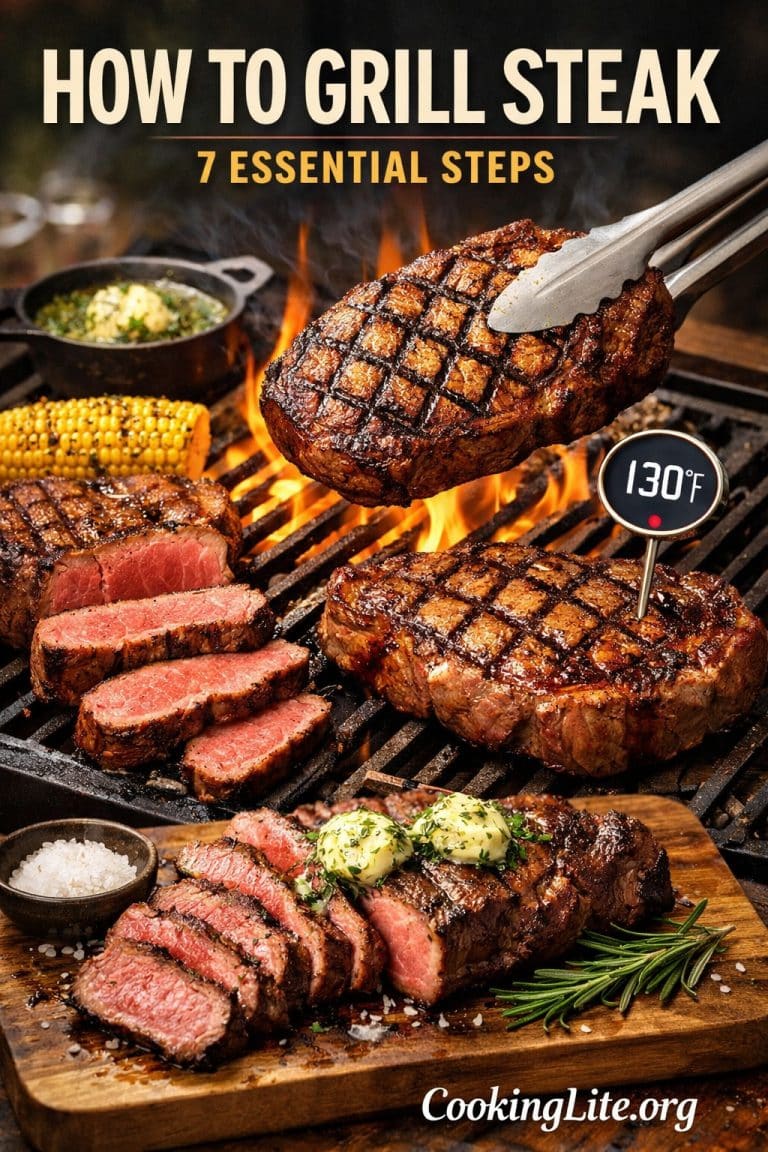
A reliable instant-read thermometer is the most important tool for anyone learning how to grill steak at home. Insert the probe into the thickest part of the steak, avoiding contact with bone or fat pockets. Rare steaks should reach 120 to 125 degrees Fahrenheit internally. Medium-rare, widely considered the ideal doneness, targets 130 to 135 degrees. Medium lands between 135 and 145 degrees.
Remove the steak from the grill five degrees below your target because carryover cooking raises the temperature during resting. This technique ensures you never overshoot your desired doneness level. Guessing by pressing the meat with your thumb is unreliable and inconsistent. Invest in a quality thermometer and you will grill steak to perfection every single time without second-guessing yourself.
Step 6: Rest Your Steak Before Cutting
Resting is a crucial step many skip when they first learn how to grill steak. When you pull a steak off the grill, the muscle fibers are tightly contracted and juices are pushed toward the center of the meat. Cutting immediately causes those juices to flood onto the cutting board instead of staying inside. Let the steak rest on a wire rack, tented loosely with foil, for at least five minutes.
During resting, internal fibers relax and redistribute juices evenly throughout the steak. A well-rested steak loses roughly 50 percent less moisture compared to one sliced immediately. For thicker cuts, extend resting to eight or ten minutes. This patience pays off with noticeably juicier, more flavorful results each time you grill steak for family or friends.
Step 7: Slice and Serve Like a Professional
The final step in mastering how to grill steak involves slicing and presentation. Always cut against the grain, which means perpendicular to the visible lines running through the meat. This shortens muscle fibers and makes each bite significantly more tender. Use a sharp carving knife at a slight angle to create wider pieces that showcase the beautiful interior color.
Top your sliced steak with compound butter made from softened butter, minced garlic, fresh herbs, and flaky sea salt. The butter melts slowly over the warm meat, adding richness and visual appeal. Once you truly know how to grill steak, pair it with grilled vegetables, a fresh salad, or roasted potatoes for a complete and satisfying meal.
Common Mistakes to Avoid When You Grill Steak
Even experienced cooks make errors that compromise their results. One frequent mistake is grilling cold steak straight from the refrigerator. Cold meat cooks unevenly, leaving the center raw while the exterior overcooks. Remove your steak 30 to 45 minutes before grilling to approach room temperature. This small step dramatically improves how evenly the steak cooks from edge to edge.
Another common error is constantly flipping or moving the steak, which disrupts heat transfer and prevents proper crust development. Using lighter fluid imparts chemical flavors that overpower quality beef. Invest in a chimney starter instead. Skipping the rest phase guarantees drier results regardless of technique. Avoiding these pitfalls is essential to grill steak successfully at any skill level.
How to Grill Steak for Any Occasion
Different events call for different approaches. Weeknight dinners benefit from quick-cooking flat iron or sirloin steaks that keep total preparation time under 20 minutes. Weekend gatherings deserve premium ribeye or porterhouse cuts that deliver dramatic presentation. For crowds, use the reverse-sear method where you cook slowly on indirect heat first, then finish with a blazing hot sear.
Plan six to eight ounces of boneless steak per adult guest. For bone-in cuts, increase to ten ounces since the bone accounts for significant weight. Now that you understand how to grill steak from start to finish, fire up your grill and put these seven proven techniques into action. With practice and patience, you will consistently produce steaks rivaling those served at high-end steakhouses.